
Science fiction has always been Hollywood’s most flexible genre. It absorbs cultural anxiety, reflects technological change, and asks the questions other genres cannot touch. What is happening in sci-fi right now is particularly interesting because the current sci-fi movie trends reflect a culture that is genuinely uncertain about its own future in ways that feel new. Audiences are not just watching stories about technology. They are watching stories that mirror conversations happening in real life about AI, surveillance, climate, and what it means to be human in an increasingly automated world. The genre has never felt more timely or more culturally urgent.
AI and Machine Consciousness Are Everywhere Right Now
The single most dominant thread running through current sci-fi movie trends is artificial intelligence. This is not a new subject for the genre, but the tone has shifted considerably from earlier decades. The AI stories of the 1980s and 1990s tended toward clear antagonism. The machine wants to destroy humanity. The current generation of AI narratives is considerably more ambiguous and considerably more unsettling for it. The AI in contemporary sci-fi is often sympathetic, morally complex, and uncomfortably relatable.
This shift directly reflects what is happening outside the cinema. Millions of people now interact with AI systems daily in ways that feel neither threatening nor comforting but genuinely strange. Current sci-fi movie trends are processing that strangeness in real time. Films exploring what it means for a machine to develop preferences, fears, or something resembling desire are resonating because they articulate anxieties that audiences already carry but have not found language for.
The question of consciousness sits at the center of this trend. Not whether AI can be dangerous, which feels settled, but whether AI can be aware, and what obligations we might have if it is. These are questions philosophy has explored for centuries, and current sci-fi movie trends are bringing them to mainstream audiences through narrative rather than argument. The genre has always been better than philosophy at making abstract questions feel personal, and this particular question has never felt more personally relevant.
Climate Fiction Has Found Its Blockbuster Moment
Climate anxiety has been building in culture for years, but current sci-fi movie trends suggest Hollywood has finally found ways to translate it into commercially viable narratives. The earlier wave of climate-themed films tended toward disaster spectacle that aestheticized destruction without engaging seriously with cause or consequence. The current generation of climate science fiction is doing something more interesting. It explores the social and psychological dimensions of living with environmental collapse rather than simply depicting the collapse itself.
Films set in worlds where climate change has already happened rather than where it is happening are becoming a significant strand of current sci-fi movie trends. The post-catastrophe world is now a recognizable setting with its own visual grammar and social logic. These are not optimistic films, but they are not nihilistic either. They tend to focus on human adaptation, community, and the persistence of meaning in degraded conditions. That tonal register reflects a cultural shift from denial and alarm toward something more like grief and practical reckoning.
The commercial dimension of this trend is significant. Climate science fiction is no longer niche or prestige-only territory. It is finding its way into major studio productions with significant budgets and wide releases, which means current sci-fi movie trends around climate are shaping mainstream cultural conversation rather than speaking only to already-converted audiences.
Space Exploration Narratives Are Back With New Emotional Weight
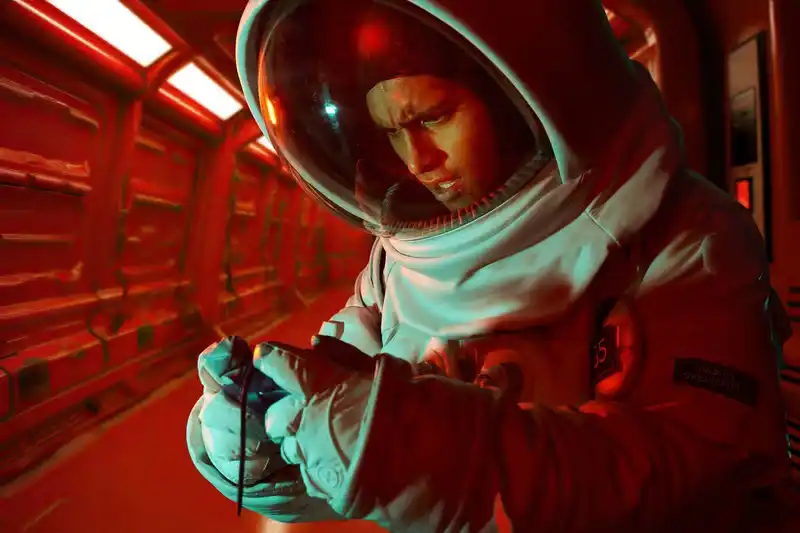
Space-set science fiction has returned strongly to Hollywood, but the current sci-fi movie trends in this territory feel different from the optimistic space opera that dominated earlier eras. Contemporary space films tend to sit with the existential weight of what space travel actually means. The isolation, the scale of the distances involved, the fragility of human life against the indifference of the cosmos. These are not films about conquest. They are films about what it means to be small and far from home.
The emotional register has shifted considerably. Space was once the frontier of possibility in Hollywood science fiction. Current sci-fi movie trends use space more often as a setting for examining interiority, grief, and the limits of human endurance. Characters in contemporary space films are as likely to be grappling with personal history as with external threat. The cosmos functions as a backdrop against which very human questions become unavoidable because there is nowhere else to go and no distraction from the fundamental questions the situation raises.
Technical authenticity has also become more valued within current sci-fi movie trends in this space. Audiences have become more sophisticated about what space travel actually involves, partly through documentary content and partly through genuine public interest in real-world space programs. Films that take physical realism seriously are rewarded with a particular kind of engagement from audiences who notice and appreciate the effort.
Dystopian Futures Feel Closer Than They Used To
Dystopian science fiction has never been absent from Hollywood, but current sci-fi movie trends suggest the genre is undergoing a tonal shift that reflects changed cultural conditions. The dystopias of a decade ago often felt speculative in a way that provided comfortable distance. The surveillance state, the authoritarian government, and the corporate control of public life were imaginative extrapolations of tendencies already visible but not yet dominant. Current sci-fi movie trends in the dystopian space feel different because the distance has closed considerably.
Contemporary dystopian science fiction is grappling with scenarios that many audiences recognize as already partially realized. Surveillance infrastructure exists. Algorithmic systems make consequential decisions about people’s lives. Economic precarity has intensified across multiple demographics. The current sci-fi movie trends in dystopian filmmaking reflect a genre that is less comfortable providing the catharsis of watching a hero overthrow an obviously monstrous system and more interested in exploring what daily life feels like when the oppressive system is normalized, diffuse, and genuinely difficult to identify as a single enemy.
This makes for less triumphant stories and more psychologically realistic ones. The resonance with audiences is strong precisely because the films describe conditions that feel recognizable rather than fantastically remote. Current sci-fi movie trends in this territory are producing some of the most politically serious filmmaking happening anywhere in contemporary Hollywood.
The Return of Practical Effects Alongside Digital Technology
One of the more surprising current sci-fi movie trends is a genuine renewed interest in practical effects and the aesthetic qualities they produce. The all-digital visual landscape that dominated science fiction filmmaking for roughly two decades has produced a predictable counterreaction from both filmmakers and audiences. There is a visible appetite for texture, weight, and physicality in science fiction imagery that pure CGI struggles to provide, regardless of its technical sophistication.
This does not mean a rejection of digital technology. Current sci-fi movie trends are more accurately described as a hybrid approach where practical elements provide the tactile foundation and digital tools extend and enhance them. The result is a visual quality that feels different from either pure practical or pure digital approaches. Objects look like they exist in the world rather than being composited into it. Environments have the grain and imperfection of physical reality.
The filmmakers driving this approach cite specific reasons that go beyond aesthetics. Practical effects on set give actors something real to respond to, which affects performance in ways that even the best digital replacement cannot fully replicate. The constraint of physical effects also forces creative problem-solving that sometimes produces solutions more interesting than unlimited digital freedom would have generated. Current sci-fi movie trends around practical effects reflect a maturing understanding of what different tools are actually good for rather than a nostalgic retreat.
Franchise Science Fiction and the Search for Meaning
The franchise model continues to dominate Hollywood science fiction, and current sci-fi movie trends within the franchise space show an industry trying to sustain audience engagement with established properties by introducing genuine thematic weight rather than relying purely on spectacle and continuity rewards. This is a response to visible audience fatigue with franchise products that prioritize connective tissue over standalone narrative quality.
The more successful recent franchise science fiction has invested in stories that work as individual films while connecting to larger universe narratives. Current sci-fi movie trends suggest that the studios learning from the franchise formula’s diminishing returns are those willing to let individual filmmakers bring genuine creative vision to their entries rather than subordinating everything to universe management. The results when this approach is taken tend to be both critically and commercially stronger, which is creating gradual pressure for the model to shift.
Independent Sci-Fi Is Punching Above Its Weight
Perhaps the most encouraging of current sci-fi movie trends is the consistent quality emerging from lower-budget independent science fiction. Films made outside the studio system are exploring ideas and formal approaches that franchise obligations and marketing pressure would never permit, and audiences are finding them through streaming platforms and festival circuits in meaningful numbers.
Independent science fiction currently accounts for some of the most conceptually ambitious filmmaking in the genre. Ideas that major studios would consider too challenging or too slow are being developed by independent filmmakers with genuine creative freedom. Current sci-fi movie trends at the independent level reflect a genre that is genuinely interested in using the speculative framework for philosophical and emotional exploration rather than primarily for spectacle.
FAQs
Q1: What are the biggest current sci-fi movie trends in Hollywood right now?
AI narratives, climate fiction, dystopian realism, and practical effects revival are the dominant current sci-fi movie trends shaping major Hollywood productions in 2026.
Q2: Why is AI such a prominent theme in current sci-fi movie trends?
AI is central to current sci-fi movie trends because audiences already interact with it daily, making films about machine consciousness and ethical questions personally resonant and culturally timely.
Q3: Are dystopian films still popular within current sci-fi movie trends?
Yes. Dystopian narratives are a strong strand of current sci-fi movie trends, particularly stories exploring normalized oppression rather than overtly monstrous systems audiences can comfortably distance themselves from.
Q4: How is independent science fiction influencing current sci-fi movie trends?
Independent films are introducing conceptually ambitious ideas and formal experimentation that eventually influence mainstream productions, making them a significant driver of current sci-fi movie trends overall.
Q5: Is space exploration still a major theme in current sci-fi movie trends?
Yes, but with more emotional weight than before. Current sci-fi movie trends in space fiction focus on existential isolation and interiority rather than the conquest narratives that dominated earlier decades.