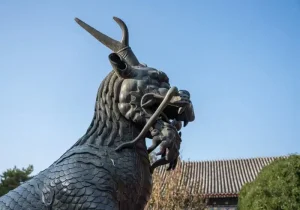

Japanese folklore is one of the richest storytelling traditions in the world. It blends the supernatural with the deeply human, wrapping moral lessons inside stories so vivid they stay with you long after the telling is done. The famous Japanese folklore tales that have survived for centuries are not simply old stories. They reflect the values, fears, spiritual beliefs, and humor of a culture that has always understood the world as populated by forces both seen and unseen. Whether you are encountering these tales for the first time or returning to them with fresh eyes, there is always more to find.
Kaguya-Hime: The Tale of the Bamboo Cutter
The Story and Its Origins
Kaguya-Hime is considered one of the oldest and most famous Japanese folklore tales in existence. It appears in The Tale of the Bamboo Cutter, a text dating to the tenth century that many scholars consider the oldest surviving Japanese prose narrative. The story follows an old bamboo cutter who discovers a tiny, luminous girl inside a glowing bamboo stalk. He and his wife raise her as their own daughter, and she grows into a woman of incomparable beauty.
Word of her beauty spreads, and five noblemen, followed eventually by the Emperor himself, seek her hand in marriage. She sets each suitor an impossible task, sending them on quests for legendary objects that cannot be retrieved or that turn out to be fraudulent substitutes. When the Emperor approaches, she refuses him, too, revealing that she does not belong to this world at all. She is from the Moon, and the people of the Moon are coming to take her home.
The ending is genuinely poignant. Kaguya-Hime does not want to leave. She loves the family that raised her and grieves the separation. But the Moon people arrive and wipe away her earthly emotions, returning her to her celestial home. She leaves behind a letter and a gift of immortality elixir for the Emperor, who refuses to drink it because immortality without her is meaningless. The story leaves the reader with something that feels like genuine loss, which is part of why it remains one of the most famous Japanese folklore tales studied today.
Themes of Longing and Otherworldliness
What makes Kaguya-Hime resonate across centuries is how honestly it sits with the pain of belonging to two worlds and fully belonging to neither. Her time on Earth gives her human attachment and human grief. Her celestial nature makes those attachments ultimately temporary. The story does not resolve this tension with a happy ending. It holds it, which is characteristic of the most enduring famous Japanese folklore tales.
Urashima Taro: The Fisherman and the Dragon Palace
The Journey Beneath the Sea
Urashima Taro is one of the most widely known famous Japanese folklore tales and one whose ending carries an almost unbearable emotional weight. A kind fisherman rescues a turtle being tormented by children on a beach. In gratitude, the turtle takes him to Ryugu-jo, the Dragon Palace beneath the sea, where he is welcomed by the Sea Princess and spends what feels like a few idyllic days.
When he finally wishes to return home, the Sea Princess gives him a lacquered box called a tamate-bako and warns him never to open it. He agrees. But when he arrives on shore, nothing is recognizable. His parents are dead. His village has transformed. Everyone he knew is gone. Three hundred years have passed on land, while he spent what seemed like days beneath the sea.
Overwhelmed and disoriented, he opens the forbidden box. A white mist rises, and suddenly he is aged beyond recognition, an old man in seconds, and then gone. The story is a meditation on time, on the impossibility of returning to what was, and on the consequences of forgetting that belonging to one place means accepting its terms. Among famous Japanese folklore tales, Urashima Taro carries perhaps the most consistently devastating emotional impact.
The Box as Symbol
The tamate-bako is one of the most analyzed objects in the famous Japanese folklore tales. Some interpretations read it as containing his true age, the years he escaped by living outside normal time. Others read it as a symbol of the things we carry from past experiences that we are warned not to examine too closely. The ambiguity is part of its staying power. The story does not explain what the box holds or why it was given to him. It simply shows what opening it costs.
Momotaro: The Peach Boy
Japan’s Most Beloved Hero Tale
Momotaro is the most widely recognized of all famous Japanese folklore tales within Japan itself and remains a cultural touchstone used in everything from children’s education to advertising. An elderly couple discovers a giant peach floating down a river. When they bring it home and cut it open, a boy emerges. They name him Momotaro, Peach Boy, and raise him as their son.
When Momotaro grows up, he sets out to defeat the demons of Onigashima Island, who have been terrorizing the land. On the way, he encounters a dog, a monkey, and a pheasant, each of whom joins him in exchange for a piece of kibidango, a millet dumpling. Together they reach the island, defeat the demons, reclaim their stolen treasures, and Momotaro returns the riches to his parents and to Japan.
The story is deceptively simple. Its surface reading is a straightforward hero’s journey. Its deeper layers involve themes of filial piety, cooperative strength over individual heroism, and the moral duty to use power in defense of the vulnerable rather than for personal gain. These are values that appear across many famous Japanese folklore tales and that reflect deeply held cultural priorities around community, loyalty, and reciprocal obligation.
The Oni as a Cultural Figure
The demons of Momotaro are Oni, one of the most recognizable figures in famous Japanese folklore tales. Oni are generally depicted as large, fearsome creatures with horns and clubs, associated with disaster, disease, and misfortune. Their role in folklore is complex. They function as antagonists but also appear in purification rituals during the Setsubun festival, where throwing soybeans is meant to drive them away. They are not simply evil. They represent the disruptive forces that community and moral action can keep at bay.
Yuki-Onna: The Snow Woman
A Ghost Story With Layers of Meaning
Yuki-Onna is one of the most hauntingly beautiful of all famous Japanese folklore tales and one of the most morally ambiguous. She is a spirit or yurei who appears during snowstorms, described as impossibly pale and beautiful, dressed in white, sometimes floating above the snow without leaving footprints. Her behavior varies across regional versions. In some she kills travelers by freezing them. In others, she simply leads them astray. In the most famous version recorded by Lafcadio Hearn, she spares a young woodcutter named Mosaku’s apprentice, Minokichi, after killing his older companion, on the condition that he never tells anyone what he saw.
Years later, Minokichi marries a woman named Yuki who bears him children and makes him happy. One winter night, he tells her the story of the snow woman he once encountered. His wife reveals that she is a Yuki-Onna and that he has broken his promise. She spares him for the sake of their children but leaves him forever. The story is not simply supernatural. It is about the promises that form the foundation of intimacy and what happens when they are broken, even carelessly, and after years of faithfulness in other respects.
The Feminine Supernatural in Japanese Folklore
Yuki-Onna belongs to a broader tradition within famous Japanese folklore tales of female supernatural figures whose power is connected to beauty, cold, and the natural world. These figures are neither purely monstrous nor purely benevolent. They exist in a moral space that reflects a cultural understanding of nature as neither safe nor hostile but as something that operates by its own rules, which humans ignore at their peril. Respecting the terms set by these figures is always the condition of survival.
Tanuki and Kitsune: Shape-Shifters and Tricksters
The Fox and the Raccoon Dog
No survey of famous Japanese folklore tales is complete without addressing the two great shape-shifting trickster figures of Japanese tradition. The Kitsune, or fox, and the Tanuki, or raccoon dog, both possess magical abilities, and both appear throughout Japanese folklore in roles that range from mischievous to genuinely dangerous. They are among the most frequently depicted figures in Japanese art, literature, and contemporary popular culture.
Kitsune are considered messengers of the Shinto deity Inari, associated with rice, agriculture, and fertility. They grow more powerful and gain additional tails as they age, with the most powerful possessing nine tails. In folklore, they can take human form, often female form, and stories of men falling in love with women who turn out to be foxes run through famous Japanese folklore tales from the earliest classical literature to modern manga. The Kitsune occupies a genuinely ambiguous moral position. They can be loyal companions and divine messengers or deceptive manipulators, depending on how they are treated and what purpose they serve.
Tanuki are generally more comic figures, associated with good fortune, sake, and a cheerful disregard for social convention. They appear outside Japanese restaurants and sake shops as good luck statues, their oversized stomachs and cheerful expressions a far cry from the more sinister aspects of their folkloric personalities. In famous Japanese folklore tales, they are often portrayed as less cunning than Kitsune but more warmly mischievous, playing tricks that cause embarrassment rather than harm.
Their Role in Modern Culture
Both Kitsune and Tanuki have traveled far beyond their folkloric origins into contemporary Japanese popular culture. Video games, anime, manga, and film draw on these figures constantly, often in ways that modify their traditional characteristics while retaining enough of the original to maintain cultural continuity. Their persistence across centuries and across every form of storytelling medium demonstrates exactly why famous Japanese folklore tales remain living traditions rather than historical artifacts. The stories keep finding new forms because the figures within them carry genuine imaginative and emotional power that each generation rediscovers for itself.
The Oni and the Supernatural World
Demons, Spirits, and the Unseen World
The broader supernatural world of famous Japanese folklore tales includes an enormous variety of beings beyond the major figures. Oni, Kappa, Tengu, Rokurokubi, and hundreds of other yokai populate traditional stories with creatures that embody specific fears, natural phenomena, or moral warnings. The Kappa is a river creature that drowns careless children and can be appeased through politeness. The Tengu are mountain spirits associated with the martial arts and pride. The Rokurokubi appear as normal humans by day but stretch their necks enormously at night in tales that carry clear associations with hidden identities and the gap between public and private selves.
These figures collectively constitute one of the most elaborate supernatural taxonomies in any folklore tradition. The Edo period scholar Toriyama Sekien produced illustrated catalogues of yokai that remain influential both as historical documents and as artistic references for contemporary creators. The richness of this tradition explains why Japanese popular culture continues to draw on folklore with such creative freedom. The source material is simply extraordinarily diverse.
Final Thoughts
Famous Japanese folklore tales endure because they are honest about the things human beings find most difficult to accept. Time passes and takes what we love. Promises matter, and breaking them has consequences. Beauty and danger coexist. The supernatural world operates by rules that do not bend to human wishes. These are not comfortable lessons, but they are true ones, and the stories that carry them have been doing so for centuries because each generation recognizes their truth and finds in them a way to think about experiences that are otherwise very hard to put into words.
FAQs
Q1: What are the most famous Japanese folklore tales for beginners to start with?
Momotaro, Kaguya-Hime, and Urashima Taro are the best starting points as they are widely known, beautifully structured, and represent the core themes found across Japanese folklore tradition.
Q2: How old are the most famous Japanese folklore tales in existence? The Tale of the
Bamboo Cutter, featuring Kaguya-Hime, dates to the tenth century. Many famous Japanese folklore tales have oral origins significantly older than their earliest written records suggest.
Q3: What themes appear most often in famous Japanese folklore tales?
Themes of impermanence, supernatural consequence, shape-shifting identity, the dangers of breaking promises, and the complex relationship between the human and supernatural worlds appear consistently across famous Japanese folklore tales.
Q4: How have famous Japanese folklore tales influenced modern pop culture?
Anime, manga, video games, and film draw extensively on famous Japanese folklore tales. Characters like Kitsune and Oni appear constantly in contemporary Japanese storytelling, connecting modern audiences to ancient traditions.
Q5: Where can I read famous Japanese folklore tales in English translation?
Lafcadio Hearn’s Kwaidan and In Ghostly Japan provide excellent English translations. Modern collections by scholars like Noriko Reider also offer accessible versions of famous Japanese folklore tales with helpful cultural context.